Search This Blog

Showing posts with label plant propagation. Show all posts

Friday, December 28, 2018

Propagation success.


A followup to my "Propagation" post from May, when I layered a number of shrubs.
Most of them have rooted.

Azalea

I will leave them attached to the parent plant, where the new roots will continue to grow over the winter.

Deutzia

Before replanting in the spring

Viburnum 

This is a simple and rewarding way of increasing your desirable plants.

Hydrangea

Sunday, May 27, 2018

Propagation

I layered this oak leaf hydrangea last fall. over the winter the stem has produced roots and new leaf growth has emerged. I will leave it attached to the parent plant  until winter dormancy and then cut the old stem, dig up and replant.


This Spring I have layered several choice shrubs, including the Cotinus coggygria 'Royal Purple". First find a stem that can be bent to the ground without damage, then wound the stem by scraping away the outer layer of bark to expose the green cambium layer.


Scrape a channel in the soil, bury the wounded area of the stem, cover with soil and weigh down with a medium size stone, or other similar weight.


Other shrubs that we are layering.
Duetzia


Duetzia, right foreground


Rosa Rugosa


 worth propagating for its fragrance.


Viburnum horizontalis


Here past its best, but still an exceptional shrub.


Weigela


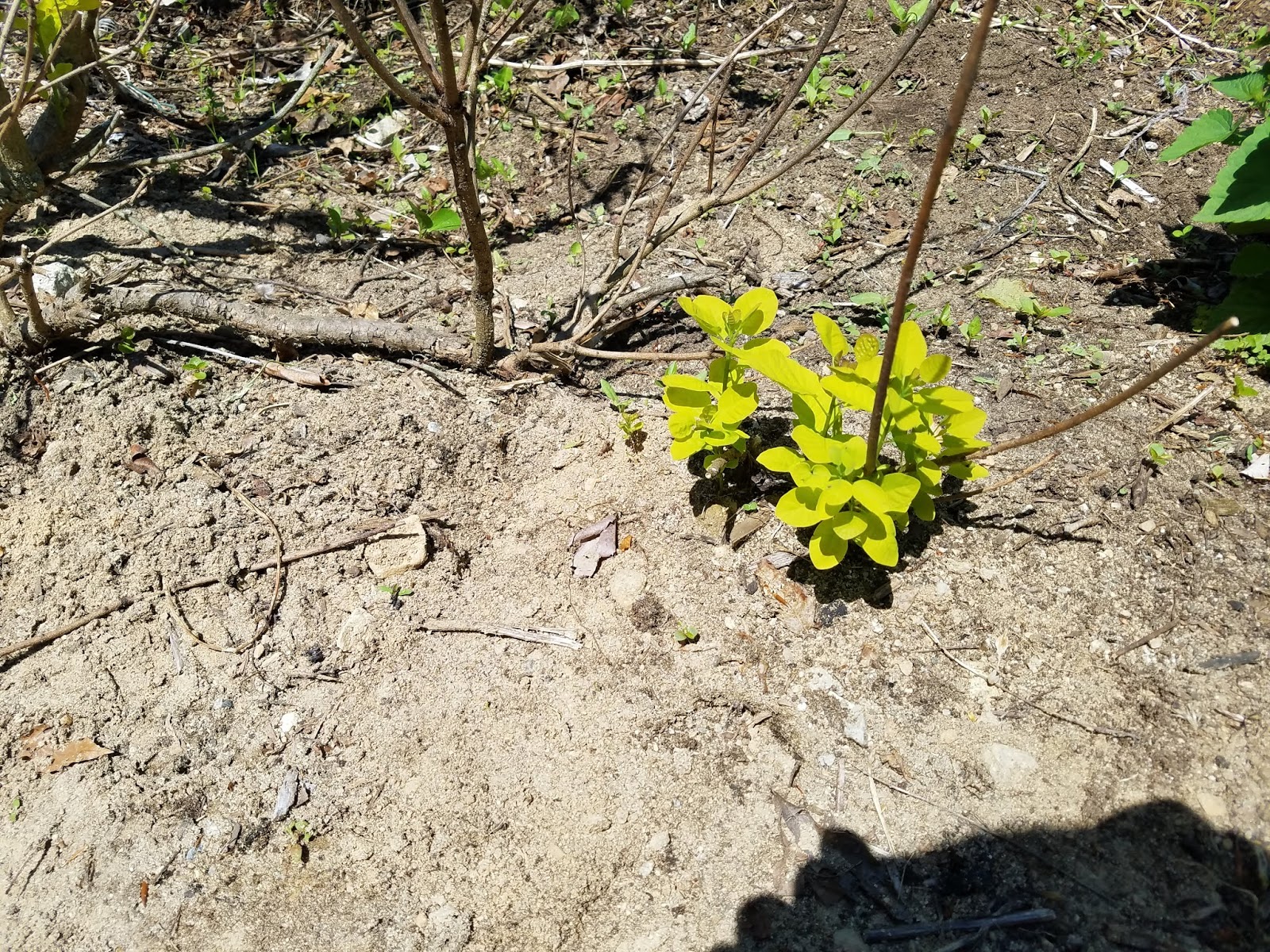
Sometimes no assistance is required, if the stem is resting on the ground it will produce roots as with this Cotinus.


This self sown seedling is of a different Wigela cultivar, but it may not come true to type.


These seedlings from the spirea back center may also show variations from the parent plant


At first I thought this must be a seedling from the parent rose


But it is an off shoot from a root. I've never seen this before on a rose.


Sunday, April 15, 2018

Roses for the making

Who wouldn't like more roses? so why not take your own cuttings. Most advice on this subject suggests taking softwood cuttings in early to mid summer, or hardwood cuttings in the fall, and I would not disagree.


But why waste your Spring rose prunings? I have considerable success striking pruned stems like the one below which is pencil thickness and ten inches long.


At the base of the cut stem, you will find a bud, with the leaf scar just below (l) or a bud eye with leaf scar. (r) 


Cut just below, or through the leaf scar


Find a bud six to eight inches above the base


and make a sloping cut just above the bud.


Dip the cutting in rooting powder


and insert into a neutral potting medium, I use a sand and perlite mix.


Label, and keep moist in a warm shady area. Is this method as reliable as softwood cuttings in the summer, or hardwood cuttings in the fall, probably not.


but you have the material from all the Spring prunings, what have you to lose other than a little time, and look what you have to gain.


Friday, June 24, 2011

PLANT TRIALS

We recently became part of a family of horticulturists who are participating in plant trials with the USDA. Back in March, we took delivery of 55 salix (willow) hardwood cuttings, 11 cultivars of 5 cuttings each,  which we’ve started in 3 gallon containers. We’re pleased to report that we have a 100% strike rate. We will plant these out in the fall as part of an erosion control trial (upon which we might put an artistic spin). At the same time we received 18 Ribes hardwood cuttings, consisting of various cultivars of Black currant, Red Currant, White Currant and Gooseberry. Unfortunately, we lost one Blackcurrant and one Gooseberry, but the rest, which are doing very nicely, will be planted into a new fruit garden in the fall and should bear within two years.

When we were invited to trial plants for the USDA, we had many options and approaches to chose from. We were intrigued by the history of many of the plants available to us and decided to trial mostly heritage and heirloom strains from Europe. Many of the cultivars we selected date to the 1800’s ( it's amazing to think that we’re working with material from 19th century Versailles) and have been kept in various controlled plant databanks throughout the US. We’re looking at how they fare in our northeastern climate and will be examining pest problems, plant viruses, hardiness, and, of course, cropping rates.

Today we received a selection of humulus lupulus; Hops, which we will trial to explore the viability of producing locally grown hops for the burgeoning Micro brewery industry here in CT. We expect these to take up a lot of real estate and we’ve not yet worked out the details of where they will, ultimately, be planted but we’re excited about this particular endeavor. It seems that in the brewing industry, the ‘freshness’ of the hops is key to the flavor of the brew and the primary producers, in Orgeon, fall all over themselves in their efforts to provide freshness through all sorts of  processing procedures; drying, freezing, freeze-drying, etc…. It will be interesting to see what we can do with truly ‘fresh-off-the-vine’ hops here in CT and we're looking to find a brewer to work with us. (If you know anyone in CT involved in the micro-brew industry please have them contact us).
Meanwhile, softwood cuttings of heirloom cranberry and seeds for native, heirloom blue and black huckleberry have also arrived. Very exciting! We’ll see what success we have with cultivating and rooting in the greenhouse and, if we’re lucky we’ll have plants to put into the bog garden in spring of 2012.
Later in the year we are expecting more cuttings of various trees, including Mulberries. Stay tuned.